
"Arabica origin"
10000 article(s) found

What are the types of coffee beans? beginners need to know the knowledge of the three original species of coffee.
Professional coffee knowledge exchange more coffee bean information please follow the coffee workshop (Wechat official account cafe_style) Qianjie-coffee three varieties introduction. Arabica Arabica coffee beans originated from the Ethiopian plateau. Originally eaten as medicine, Arabica coffee beans formed the habit of baking in the 13th century. In the 16th century, Arabica coffee beans were introduced into Europe from Arabia and became the most popular in Europe.

Arabica beans turned out to be small fruit coffee? Arabica Coffee and Arabica Coffee
Professional coffee knowledge exchange More coffee bean information Please pay attention to coffee workshop (Weixin Official Accounts cafe_style) Small fruit coffee (scientific name: Coffea arabica), also known as Arabic coffee, Arabica coffee, is a species of Rubiaceae coffee genus, is the most traditional coffee variety. Originated in East Africa, coffee was monopolized by the Arab world for a long time before the 15th century AD

Description of Arabica Coffee Flavor in Africa and Zimbabwe A brief introduction to the origin of African bean Arabica coffee
High-quality Arabica coffee beans cater to the needs of foodies. Coffee cultivation in Zimbabwe began relatively recently, in the 1960s, when farmers in southern Africa set up coffee plantations. Coffee cultivation in Zimbabwe is mainly concentrated in the eastern highlands near Mozambique, mainly by Chimanim

When was Arabica Coffee introduced into China the Origin History of Arabica Coffee
Professional coffee knowledge exchange more coffee bean information Please follow the coffee workshop (Wechat official account cafe_style) Arabica is deeply loved by the Chinese with a short history of coffee contact because of its strong fruity aroma. it was introduced to China by missionaries in the 19th century and is widely planted in the dry-hot valley of the Jinsha River above sea level 1000 meters above sea level in Panzhihua, Sichuan and western Yunnan.
Distribution of Arabica beans Arabica beans buy coffee beans Arabica beans
Arabica coffee is generally thought to originate from the Ethiopian plateau and is widely distributed in the tropics, mainly in Kenya and Ethiopia in Africa, outside Argentina and Brazil in South America, Laos and India in Central America and Asia. Its planting area is the broadest, but the planting conditions are very strict compared with the Robusta species.

Arabica Coffee Bean and Robusta Coffee Bean Origin Introduction Arabica Coffee Bean Features
Professional coffee knowledge exchange More coffee bean information Please pay attention to coffee workshop (Weixin Official Accounts cafe_style) Arabica coffee beans are fine coffee stone biological science division, door, class, order, family, genus, species, do you remember? Don't say you returned it to the junior high biology teacher. A few years ago, Taiwanese coffee makers began emphasizing Arabica beans; in fact,

Coffee encyclopedia the original variety of coffee beans
At present, the most important coffee beans in the world mainly come from three original varieties: Arabica, Roberta and Liberia. The Arabica coffee tree, which originated in Ethiopia, accounts for 70% of the world's coffee production, and almost all the world-famous coffee varieties are Arabica species. Arabica coffee trees are suitable for growing in high mountains with large temperature differences between day and night, as well as low humidity and drainage.

Two major coffee trees, Arabica and Robusta.
At present, the most important coffee trees in the world are Arabica and Robusta. These two kinds of coffee trees are the two original species of coffee trees, and the quality of coffee beans produced by these two kinds of coffee trees is also better than that of other coffee trees. Arabica coffee tree. The Arabica coffee tree, which originated from Ethiopia in East Africa, accounts for 70% of the world's coffee bean production; the world-famous Blue Mountain Coffee.

Introduction of Arabica Coffee Bean species and Origin comparison of Arabica Coffee varieties and characteristics
Professional coffee knowledge exchange more coffee bean information please follow the coffee workshop (Wechat official account cafe_style) Arabica, fine coffee turquoise bioscience in the boundary, gate, class, order, family, genus, species division, do you still remember? Don't say you gave it back to the junior high school biology teacher. A few years ago, the coffee industry began to emphasize Arabica coffee beans; in fact, it is now a boutique.
Arabica Coffee beans & Origin introduction Why Arabica caffeine content is the least but the most expensive?
Professional coffee knowledge exchange more coffee bean information Please note that the coffee workshop (Wechat official account cafe_style) is also a member of Arabica, why are some coffee beans so expensive? Arabica, the cornerstone of fine coffee, do you remember the division of boundaries, phylums, classes, orders, families, genera and species in bioscience? Don't say you gave it back to the junior high school biology teacher.
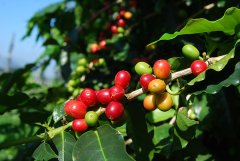
Comparison of three original species of Coffee Tree Arabica Coffee Tree
Everyone should have heard of Elaraby as a kind of coffee. The best quality beans of the famous Colombian coffee are all Elaraby varieties. When it comes to the variety of coffee, we must first understand the type of coffee tree. At present, the most important coffee beans in the world are mainly from Arabica, Robata and Liberia. these three varieties of coffee beans are the three original species of coffee trees.

The basic knowledge of coffee beans the origin of coffee coffee practice
The origin of Arabica species is the Abyssinia Plateau of Ethiopia (now the Ethiopian Plateau). In the early days, it was mainly eaten as medicine (Islamic couples used it as a secret medicine to cure body and mind or to awaken the brain). It developed the habit of baking and drinking in the 13th century and was introduced into Europe through the Arab region in the 16th century. It has become a favorite drink all over the world.
Coffee knowledge the original variety of coffee beans
At present, the most important coffee beans in the world mainly come from three original varieties: Arabica, Roberta and Liberia. The Arabica coffee tree, which originated in Ethiopia, accounts for 70% of the world's coffee production, and almost all the world-famous coffee varieties are Arabica species. Arabica coffee trees are suitable for growing in high mountains with large temperature difference between day and night, as well as low humidity and good drainage.

The best origin of coffee, the most important origin of coffee beans in the world.
Arabica coffee trees are suitable for growing in high mountains with large temperature difference between day and night, as well as low humidity and well-drained soil, ideal at an altitude of 500m-2000 m. The higher the altitude, the better the quality. But good things are difficult to cultivate, and so is Arabica coffee. In a fragile ecological environment, it is less resistant to diseases and insect pests than the other two kinds of coffee trees.

Introduction of Arabica Coffee Origin introduction of Arabica Coffee Manor
Arabica coffee accounts for 70% of all coffee production, and Arabica coffee accounts for 70% of all coffee products. its excellent flavor and aroma make it a direct drinkable coffee with only 8 Arabica beans (8). But its resistance to dryness, frost, diseases and insect pests is too low, especially the natural enemy of coffee-leaf rust, so all producing countries are in
Introduction to Coffee beans-- Yunnan small Coffee Origin Yunnan Coffee characteristics Cloud
Origin: in 1892, French missionary Father Tian succeeded in growing coffee in a place called Zhukula in Yunnan. Up to now, there are still 24 coffee trees which are more than 90 years old in Zhukula Township. Zhu Kula is a mysterious, legendary and beautiful natural village, which belongs to the Zhukula Village Committee of Pingchuan Town, Binchuan County, Dali Prefecture. It is located on the banks of Yupao River, a tributary of the Jinsha River. It is a Dali Prefecture and Chuxiong.

Arabica Coffee producing area where Arabica Coffee beans come from and where in the World
Professional coffee knowledge exchange more coffee bean information Please follow the coffee workshop (Wechat official account cafe_style) the most sensible and practical way to learn about the countries that produce Arabica coffee is to classify them into the world's three major coffee growing regions: Africa, Indonesia and Central and South America. Generally speaking, coffee grown in the vicinity has similar characteristics. If a particular

The three primary species of coffee are Arabica coffee, Robsta coffee, Liberian coffee.
Professional coffee knowledge exchange more information about coffee beans Please follow the coffee workshop (Wechat official account cafe_style) native species are plant types that develop naturally in the wild without human intervention. Coffee native species means coffee trees that are native to ancient countries such as Ethiopia without hybridization. There are three kinds of coffee that are edible.
The original variety of coffee beans
At present, the most important coffee beans in the world mainly come from three original varieties: Arabica, Roberta and Liberia. The Arabica coffee tree, which originated in Ethiopia, accounts for 70% of the world's coffee production, and almost all the world-famous coffee varieties are Arabica species. Arabica coffee trees are suitable for growing in high mountains with large temperature difference between day and night, as well as low humidity and good drainage.

Introduction of the Origin of the most traditional Arabica Coffee
Arabica (Coffea arabica) is the most traditional Arabica coffee variety. Originally from East Africa, coffee was monopolized by the Arab world for a long time before the 15th century, so it was called Arabian coffee by Europeans. It turned out that all the commercial coffee in the world were small grains, but it was only at the end of the 19th century that growers began to look for other resistance to a large-scale disease.